Welcome to your waterfront resource
South Florida's waterfront owner resource: seawalls, dredging, and boating, explained. If you own a dock, a boat slip, or a home on the water in Broward or Palm Beach counties, this is where you come to understand your waterway and stay current on the rules that shape it.
Questions? Call (561) 299-1323.
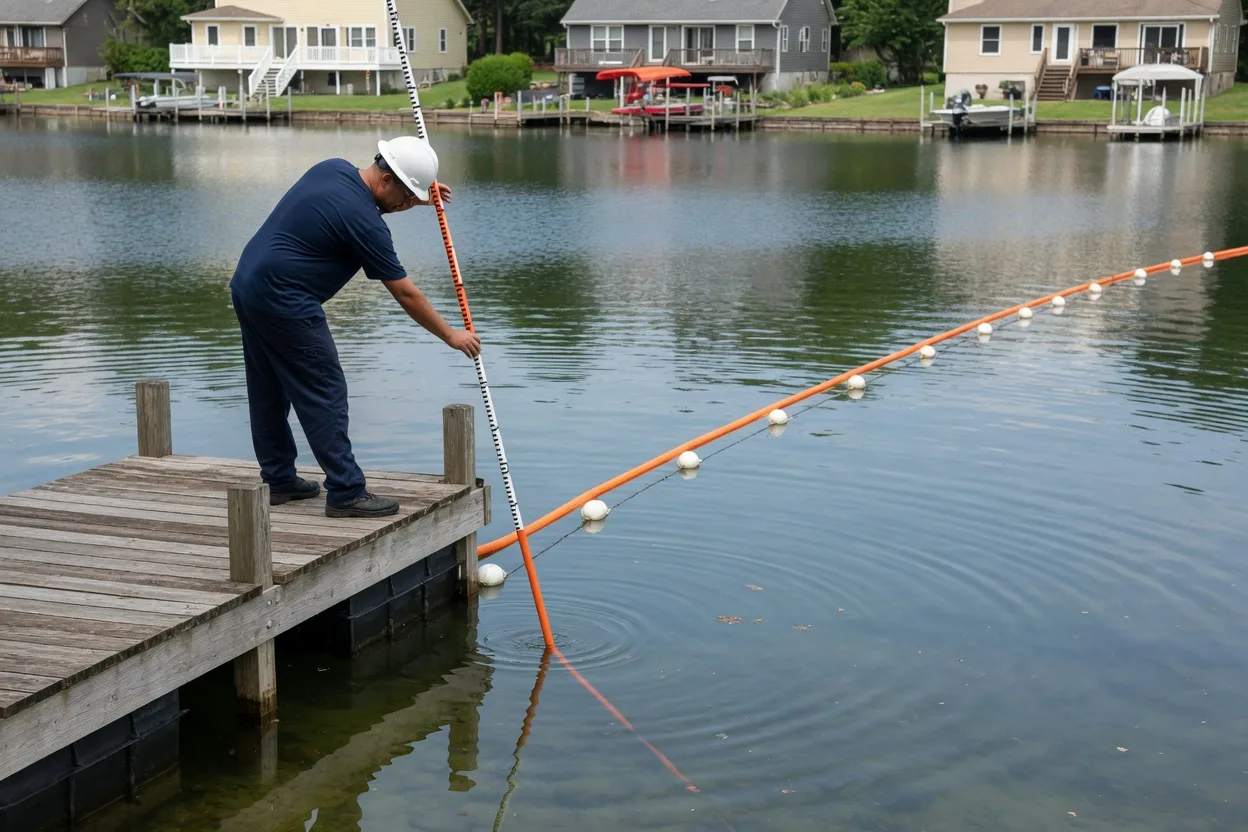
Depth at mean low tide is the honest test of a waterway
Boat day forecast
Check the forecast before you go out
Wind, waves, tides and storms decide whether it is a good day to be on the water. This live map shows the current wind layer for the Deerfield Beach coast, and you can click any point on it to see that location's detailed point forecast.
Weather map provided by Windy.com. Wind data refreshes on a rolling schedule, so confirm current conditions against an official forecast before you go out.
What owners are asking about
Questions owners ask us
Waterfront ownership comes with real questions about depth, rules, cost and permits. Here are the challenges owners bring up often, with plain-language answers.
Is my dock or canal too shallow?
Sediment builds up gradually, so last year's depth is not today's depth. Learn how to read the signs and what depth your boat really needs at mean low tide.
Read the guideDo the new seawall rules apply to me?
Broward's seawall elevation standards, the 50 percent rule, and the 2035 and 2050 deadlines affect new walls, replacements, and major repairs.
See the standardsWhat does dredging actually cost?
Published industry ranges from named sources give a starting picture, but only a site review of your specific waterway produces a real number.
See the rangesWhich permits does my project need?
Dredging in Florida tidal waters sits under local, county, state and federal oversight. Understand the layers before any work begins.
Understand permitsPractical solutions
How the work actually gets done
From measuring your water to hauling the sediment away, here is how a dredging project works, explained so any owner can follow it.
Depth verification, explained
The honest test of a waterway is depth at mean low tide. A crew measures before and after the work, and the documented depths become a record you can keep for appraisals, buyers, and future planning.
How dredging restores your waterway
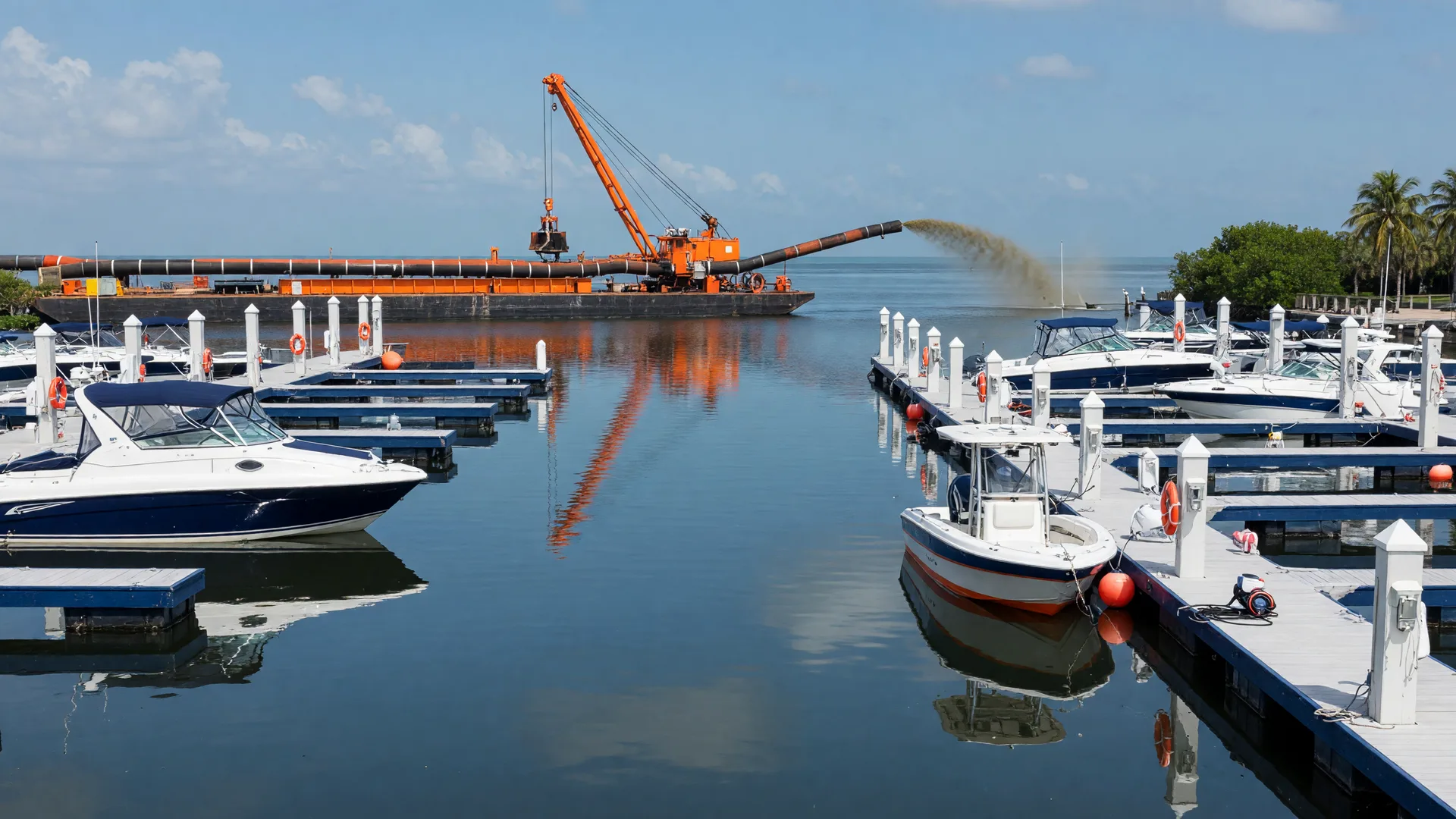
Purpose-built equipment works around docks, pilings and boat lifts to remove the sediment that has filled in your slip or canal, and the material is hauled completely away from your property.
Maintenance keeps you on the water
Sediment keeps building up, so maintenance dredging is how owners stay ahead of it. Routine work keeps channels and slips clear before a shallow spot becomes a problem for your boat or lift.
Depth at mean low tide is the honest test of a waterway
An explainer, not an ad
Depth verification is a practice, not a product. Any qualified crew measures your water before and after the work, and the documented depths are yours to keep. This site explains how it works so you can ask the right questions of any contractor you consider.
See how dredging services work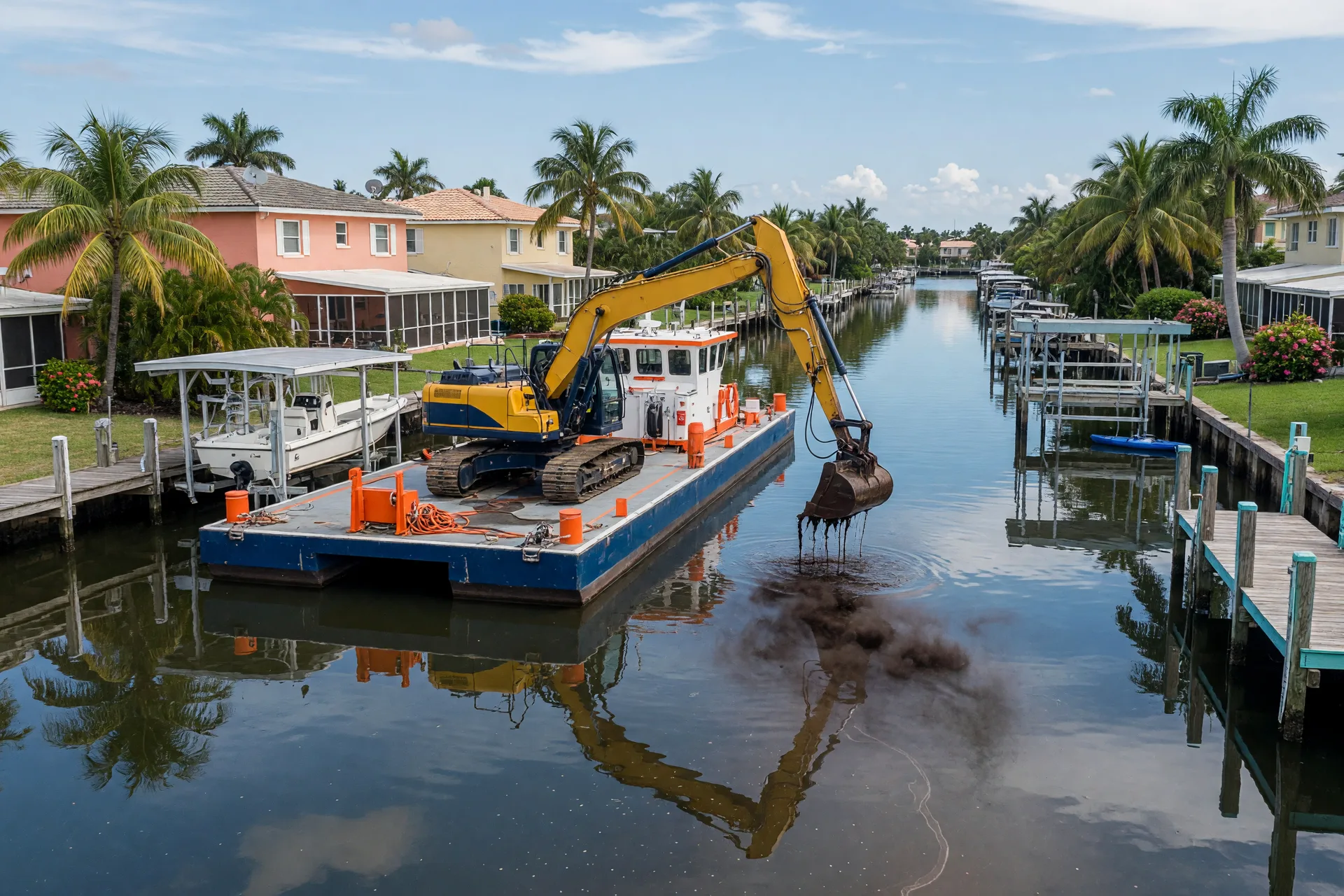
Current law changes
What changed on the water this decade
Seawall and elevation rules are moving faster than many owners expect. Here is the Broward County framework that matters today, and where to verify it for your site.
Broward County ordinance, April 28, 2020
The first countywide seawall and top-of-bank elevation standard in Florida, set to address sea level rise and tidal flooding.
The 50 percent rule
A repair that touches more than half of a wall can legally require the whole wall to be raised to the current elevation.
2035 and 2050 milestones
Under current Broward guidance (as of October 2026), applications before January 1, 2035 may be permitted at a minimum 4 feet NAVD88, designed to accommodate 5 feet by 2050. Fort Lauderdale already enforces 5 feet NAVD88.
Verify before you build
Standards change over time and city rules can differ from county guidance. Always verify current requirements with your local building department or a licensed professional.
Planning a rebuild or major repair? Start with the standards.
Editorials and blog
Read, learn, decide
Plain-language editorials on the topics waterfront owners actually face, from seawall standards to the value of deeper water.
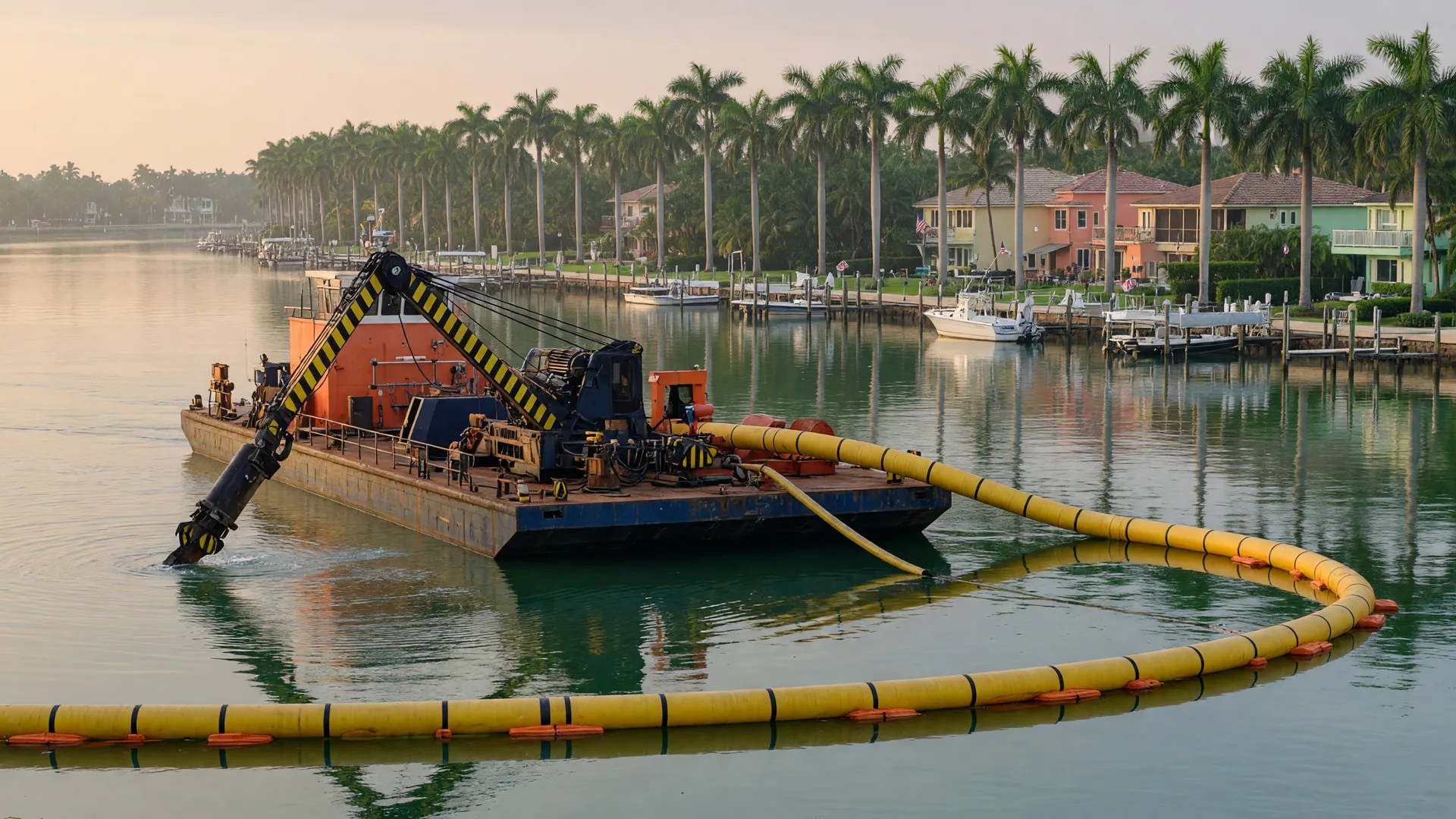
Who Keeps the Intracoastal at Depth: FIND and the Army Corps Maintain the Federal Channels
The Atlantic Intracoastal Waterway through Palm Beach and Broward counties is a federally authorized navigation channel, and its depth only stays at the authorized mark because someone maintains it. The Florida Inland Navigation District, FIND, is the local sponsor that works with the U.S. Army Corps of Engineers to plan and permit that maintenance dredging. Knowing how the work is organized helps owners understand the channel depth they can expect and why maintenance schedules exist.
Read article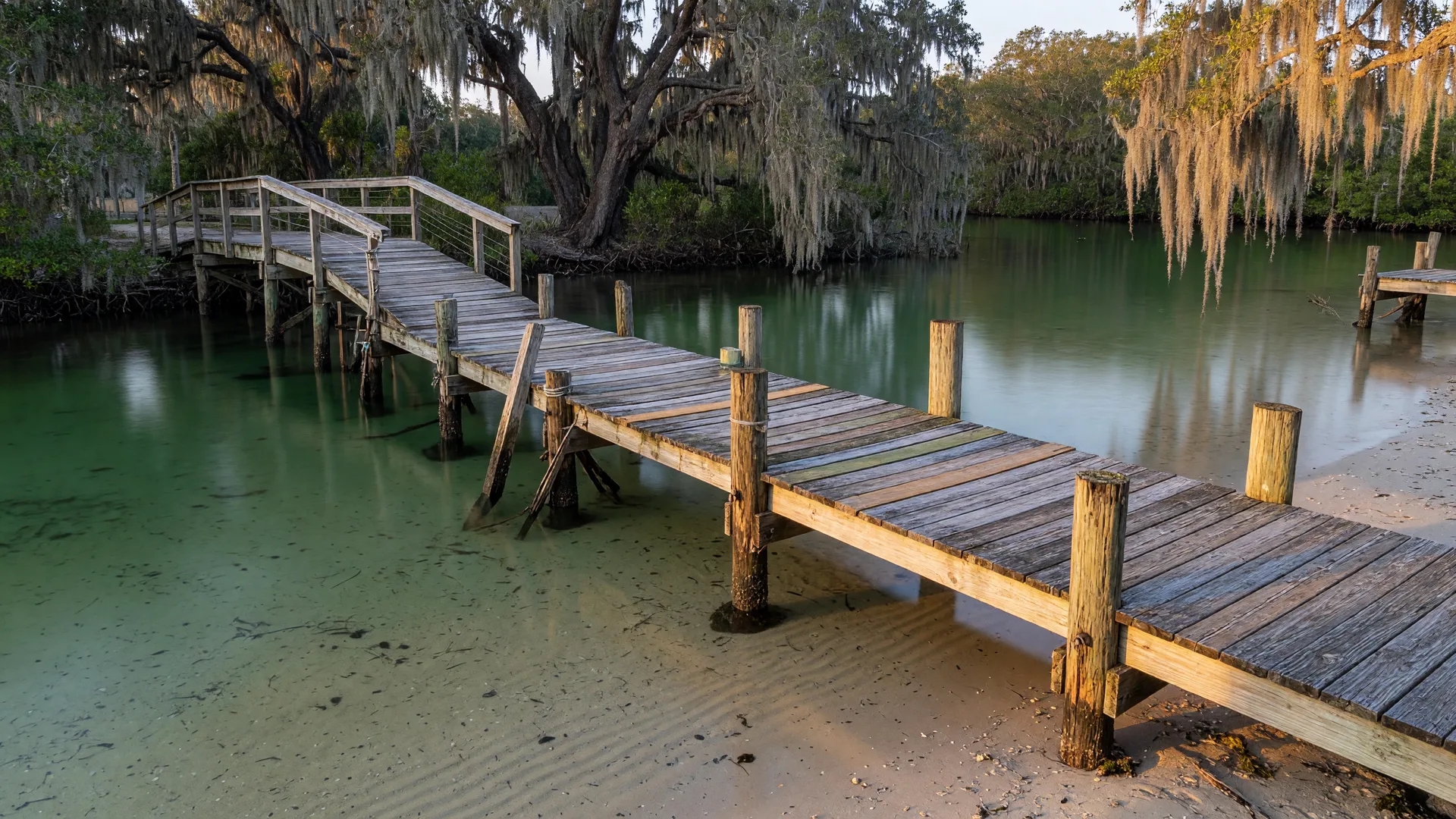
Sovereign Submerged Lands: The State Authorization Behind Your Dock
In Florida, the land beneath most coastal waters, rivers, and canals belongs to the state, not to the waterfront owner. Any dock, pier, or platform that extends over those waters needs authorization from the Florida Department of Environmental Protection, usually a letter of consent for a small single-family dock or a lease for a larger facility. This post explains which form applies and what the rules require.
Read article
February 2027 Marine Outlook: Supermoon Tides, Cold Fronts, and the Boat Show Window
February is near the heart of South Florida's dry season, with cool mornings, passing cold fronts, and intervals of north wind between them. Tides will run a little higher than an ordinary spring tide around the new moon on February 6 and the perigean full moon on February 20, though the seasonal king tide window ended months ago. The Discover Boating Miami International Boat Show runs February 10 to 14, so this month's weather windows matter for anyone planning to move a boat.
Read article66 articles and counting, all written for owners in Broward and Palm Beach counties.
Start here
Request free resources about dredging
Tell us about your dock, slip or waterway and we will send you the free resources that match your situation, including the Waterfront Owner's Guide. When you are ready, we can also arrange a free site consultation to review your specific waterway.
Request free resources about dredging
We'll reach out with the resources for your situation, and a free site consultation if you want one.
Your waterway, understood from the first question.
Start with free resources, ask your questions, and plan your next step with confidence.
Request free resources