
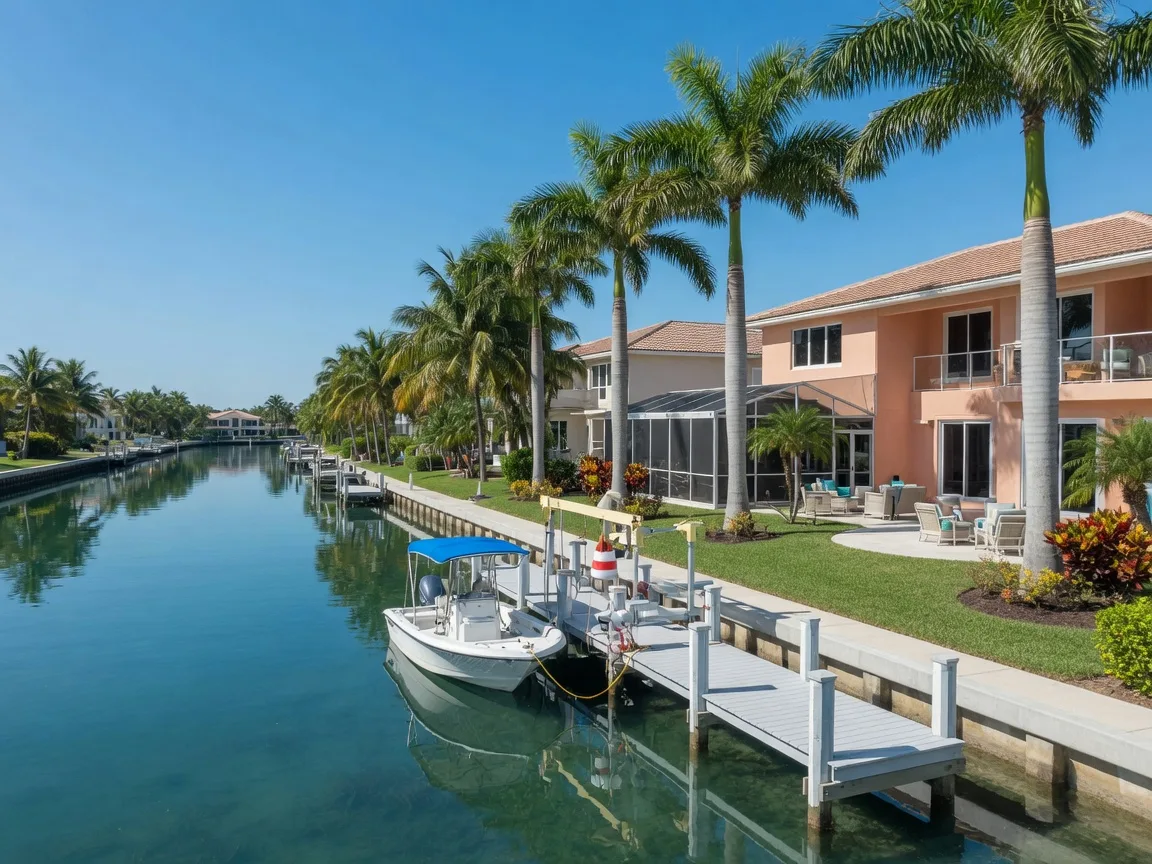
The Waterfront Owner's Guide to Dredging and Permits
A clear, practical guide for boat, dock and waterfront owners in South Florida. Learn how sediment builds up, what depth your boat really needs, how dredging works, and which permits apply to your waterway.
How sediment builds up and what it means for boat access
South Florida canals and boat slips slowly collect silt, sand and organic material carried in by tides, rain and runoff. Over time that sediment settles on the bottom and the waterway gets shallower, often without drawing much attention until a boat starts touching bottom.
The buildup rarely happens all at once. It is gradual, which is why last year's depth is not today's depth. A canal that used to handle a deep-draft boat can quietly become too shallow, and the loss of usable depth is exactly what dredging restores.
Boat draft vs. actual depth at mean low tide
Boat draft is the depth of water a boat needs to float, measured from the waterline to the lowest point of the hull. A boat with a 2-foot draft needs water deeper than 2 feet to avoid touching bottom, and most owners want extra clearance so wakes, tides and loaded weight do not leave the hull on the bottom.
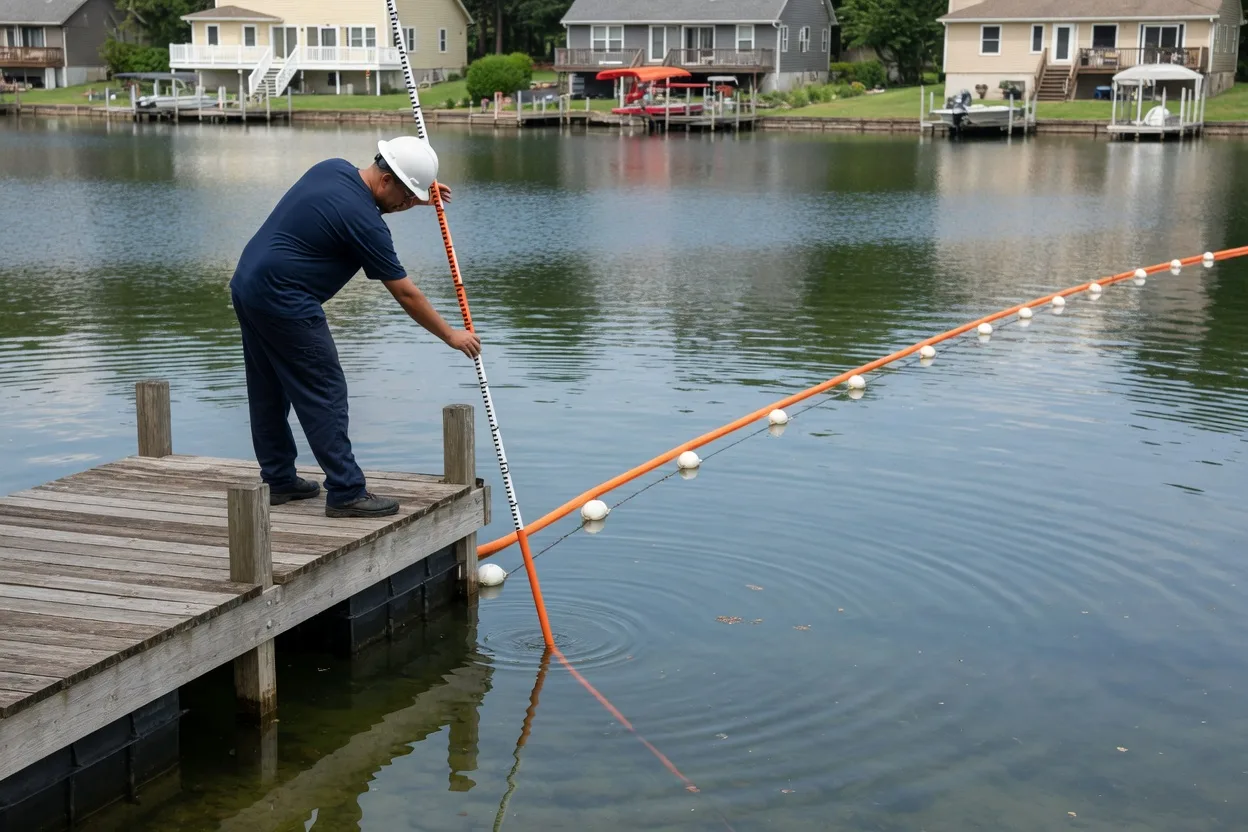
The number that matters is the actual depth at mean low tide, the lowest level the water regularly reaches. That is the honest test of whether your boat clears the bottom. If the depth at mean low tide is less than your boat's draft plus a little clearance, your waterway is too shallow for that boat.
Signs your dock or canal is too shallow
A few clear signs tell you a waterway is losing depth:
- Your boat touches bottom at low tide, even when it is tied up or on the lift.
- Docking becomes difficult, with the hull scraping or the boat hard to position.
- Visible shoaling, with sandbars or mud flats showing at low tide near your dock.
- Your boat lift does not clear: the hull rests on the bottom before the lift is fully raised.
If you notice any of these, it is worth having the depth measured. A quick assessment tells you how much water you actually have and what a dredging project would involve.
How dredging works
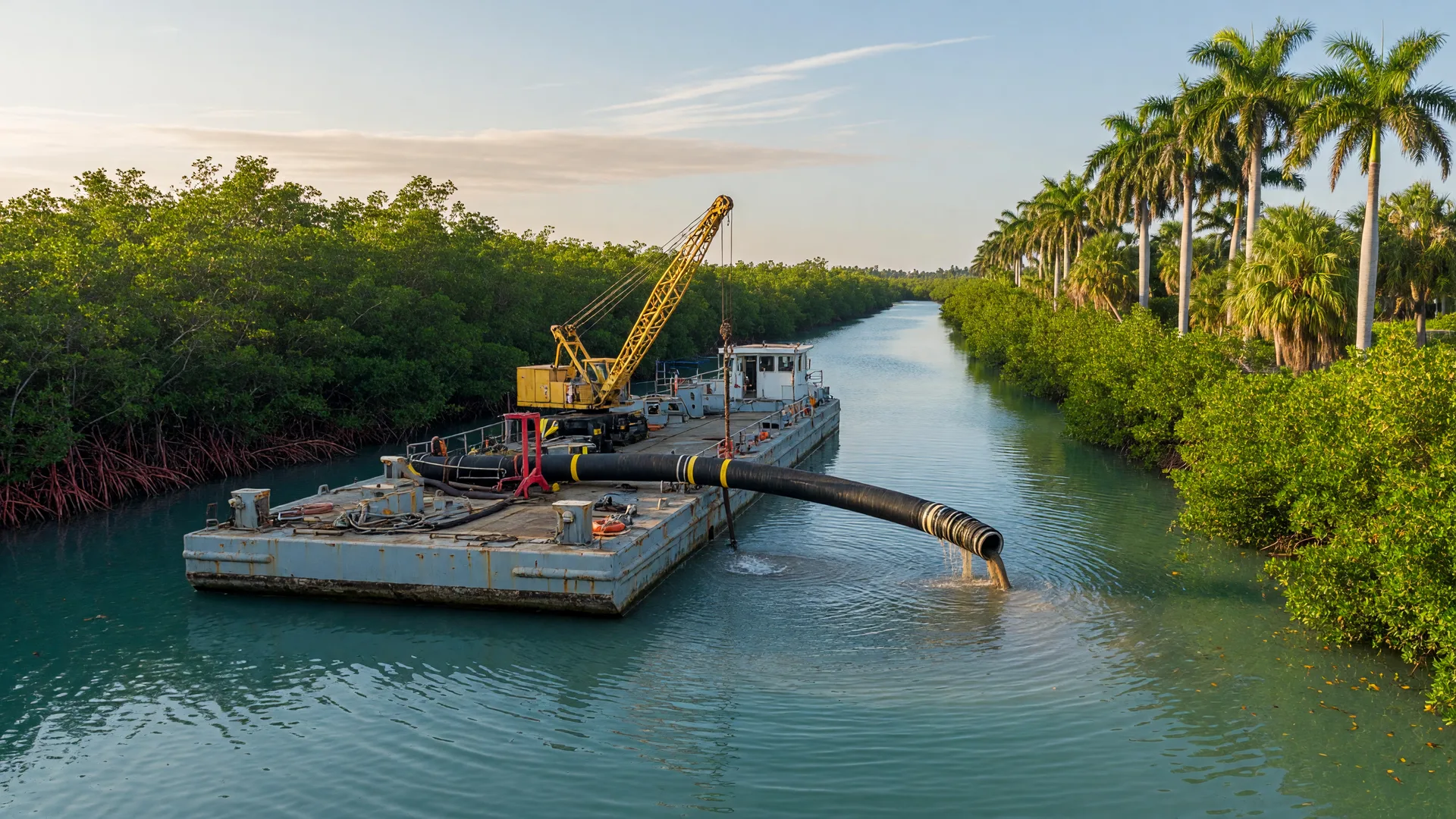
Dredging removes the sediment that has filled in your waterway. Eastern Dredging uses purpose-built equipment sized and maneuverable enough to work around docks, pilings and boat lifts, so the job is done carefully without disturbing your setup.
The material is lifted onto the barge and then completely hauled away, so nothing is left behind on your property. When the work is done, your dock, slip and canal are left clean and at the depth they are supposed to have.
The permit layers involved
Dredging in Florida waterways sits under several layers of oversight. Depending on your location and the scope of the work, a project can involve local, county, state and federal agencies, including the U.S. Army Corps of Engineers (USACE). Getting the right permits before work begins is a normal and necessary part of the project.
In Broward County, seawall standards add another layer for waterfront owners. A repair that touches more than half of a wall, the 50 percent rule, can legally require the whole wall to be raised to the current elevation. Under current Broward guidance, applications submitted before January 1, 2035 may be permitted at a minimum 4 feet NAVD88 as long as the wall is designed and built to accommodate 5 feet by 2050. Fort Lauderdale already enforces a 5-feet NAVD88 standard for newly built or replaced walls.
This is why professional permit handling matters. A crew that knows the local, county, state and federal process can help you understand what applies to your property, prepare the paperwork, and keep the project moving without delays. Eastern Dredging handles permits as part of the job, so you are not left to navigate the process alone.
Maintenance and emergency service
Sediment keeps building up, so maintenance dredging is the way to stay ahead of it. A routine project keeps channels and slips clear before a shallow spot becomes a problem for your boat or your lift.
When a boat is stuck or access is cut off, emergency service gets your waterway working again. Eastern Dredging responds when you need the depth back, and works any tide, any time, when conditions allow.
Questions & answers
Frequently Asked Questions
Straight answers on cost, shallow docks, turnaround, permits and haul-away. For the specifics of your waterway, request a free on-site estimate.
How much does dock dredging cost?
Published industry ranges put simple sand or silt removal around $20 to $100 per cubic yard, dock dredging usually around $20 to $50 per cubic yard, and difficult jobs with muck or limited access at $100 to $300+ per cubic yard. Every waterway is different, so the only reliable number for your property comes from a free on-site estimate. Full range details are on our Dredging Costs page.
See the Dredging Costs pageHow do I know if my dock is too shallow?
Your boat touches bottom at low tide even when it is tied up or on the lift; docking gets difficult with the hull scraping; sandbars or mud flats show at low tide near your dock; or your boat lift does not clear because the hull rests on the bottom before the lift is fully raised. The honest test is your boat's draft against the actual water depth at mean low tide.
How long does a typical dredging job take?
Typical residential jobs are handled with a one-day turnaround. Larger projects take longer depending on volume, access, disposal and permit timing, and the free on-site estimate gives you a clear plan and timeline for your specific waterway.
Do I need permits for dredging?
Yes, in most cases. Dredging in Florida tidal waters sits under local, county, state and federal oversight, including the U.S. Army Corps of Engineers (USACE) for many tidal projects. Eastern Dredging handles permits as part of the job, so you are not left to navigate the process alone.
Do you haul away the dredged material?
Yes. Complete haul-away is standard: sediment is loaded onto the barge, transferred into a specially designed truck, and removed entirely from your property. Nothing is left in your canal, on your dock, or in your yard.
Will deeper water add value to my property?
Deeper water at mean low tide widens the range of boats a property can serve, which can broaden your buyer pool at resale, and a documented dredging project carries over with the property. How much it adds depends on your local market and comparable sales in your area.
Free estimate
Request your free on-site estimate
Every waterway is different, so cost varies by job. The reliable first step is a free on-site estimate: a qualified crew looks at your dock, slip and water depth and gives you a clear picture of what your project would involve.
Request Your Free On-Site Estimate
Tell us about your property and we'll reach out to schedule your free estimate.
Use your boat. Any tide - any time, when conditions allow.
20 years serving South Florida waterfront homeowners in Palm Beach and Broward counties.
Call (561) 299-1323