
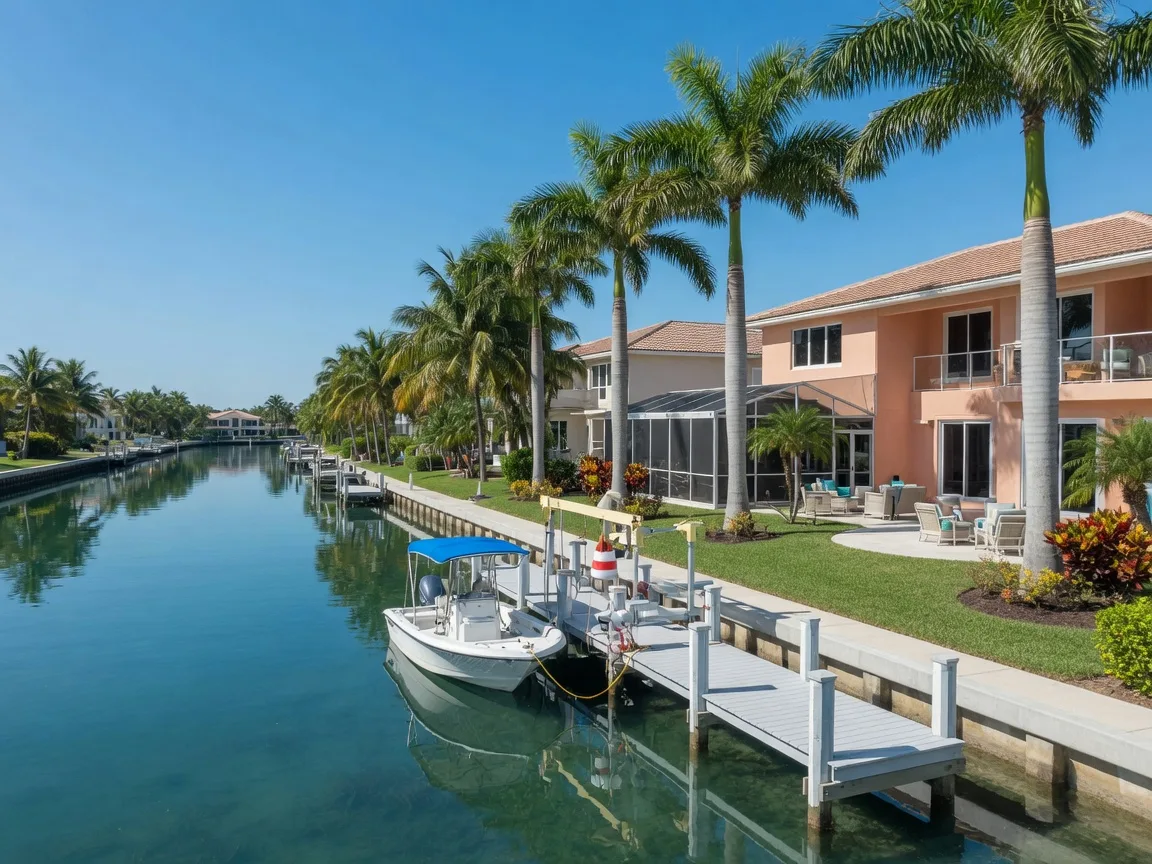
Broward County adopted new seawall elevation standards to address sea level rise and tidal flooding. Here is what boat and dock owners should know about the rules, the deadlines, and the cost.
Eastern Dredging: South Florida's Waterfront Specialists
Eastern Dredging, South Florida's Waterfront Specialists, has served the region since 2006. Based in Deerfield Beach, the company is licensed and insured, with purpose-built dredging equipment, complete haul-away of dredged material, permit handling, and quick turnaround for typical jobs.
Services include dock and boat slip dredging, boat lift dredging, HOA and marina waterway management, and maintenance and emergency services. If you own a dock, boat slip, or waterfront property in Broward or Palm Beach counties, Eastern Dredging is set up to help you keep your waterway clear and your property in good order.
The Broward County rules
Broward adopted a countywide ordinance on April 28, 2020, the first in Florida, setting minimum seawall and top-of-bank elevation standards in tidal flood prone areas to address sea level rise and tidal flooding.
The regional resilience standard, Broward land use policy 2.21.7, applies to tidally influenced properties and gave local cities time to adopt matching standards. Fort Lauderdale adopted a taller seawall standard in March 2023, 5 feet NAVD88, with fines for owners who do not comply for newly built or replaced walls.
Under current Broward guidance (2026), applications submitted before January 1, 2035 may be permitted at a minimum 4 feet NAVD88 as long as the wall is designed and built to accommodate 5 feet by 2050.
There is also the 50 percent rule to understand: a repair that touches more than half of a wall can legally require the whole wall to be raised to the current elevation.
These standards change over time, and local city rules can differ from county guidance. Before you start any work, verify the current requirements for your property with your local building department or a licensed professional.
Why it matters
Sea level rise is raising tidal water levels across Broward communities, which increases tidal flooding risk for low or aging seawalls.
Owners of existing seawalls are generally not forced to raise them right away, but new construction, full replacements, and major repairs must meet the standards, and waterfront properties in tidal flooding areas carry disclosure requirements.
The rules are designed to help owners plan and budget before flooding becomes a problem, rather than react to it after the fact.
The price
Costs vary by wall length, condition, construction type, access, and permits, so there is no single figure that applies to every property.
The reliable first step is a free on-site estimate. A qualified crew can look at your wall and waterway and give you a clear picture of what your project would involve.
The deadline
The key milestones are January 1, 2035, the 4 feet NAVD88 minimum with a 5 feet by 2050 design, and the 2050 standard itself, plus current city rules in places like Fort Lauderdale that are already at 5 feet NAVD88.
Acting early gives owners time to plan, permit, and budget. Waiting until a repair is urgent can mean less time to arrange the work and the permits it requires.
What This Means for Builders
Seawall elevation is a day-one site-work item. For new construction, full seawall replacement, and major repairs, the current elevation standard applies to the project now, not in 2035. Many waterfront homes in the area are being taken down and rebuilt as new construction, and on a tidally influenced lot, the seawall standard applies to that project immediately.
The 50 percent rule matters here too: a repair that touches more than half of a wall can legally require the whole wall raised to the current elevation. That means a routine repair on an older wall can trigger a full rebuild to the current standard, so it should be designed, permitted, and budgeted as part of the overall project.
Dock and boat lift work tied to a new build may be affected as well, since the seawall and the structures it supports are part of the same waterfront site. Eastern Dredging handles permits and can be consulted during planning to help builders understand what applies to their site and what the permitting path looks like.
Seawall and elevation standards change over time. Verify the current requirements for your specific site with the local building department or a licensed professional before design or construction begins.
How Eastern Dredging can help
Eastern Dredging handles permits, uses purpose-built equipment, hauls away all dredged material, and offers maintenance and emergency service. That means one crew can manage the practical side of your waterfront project from start to finish.
Call (561) 299-1323 or email slselleck@gmail.com for a free estimate, or use the site contact form to tell us about your dock, slip, or waterway.
This content was created with AI assistance and reviewed for fair housing compliance.