
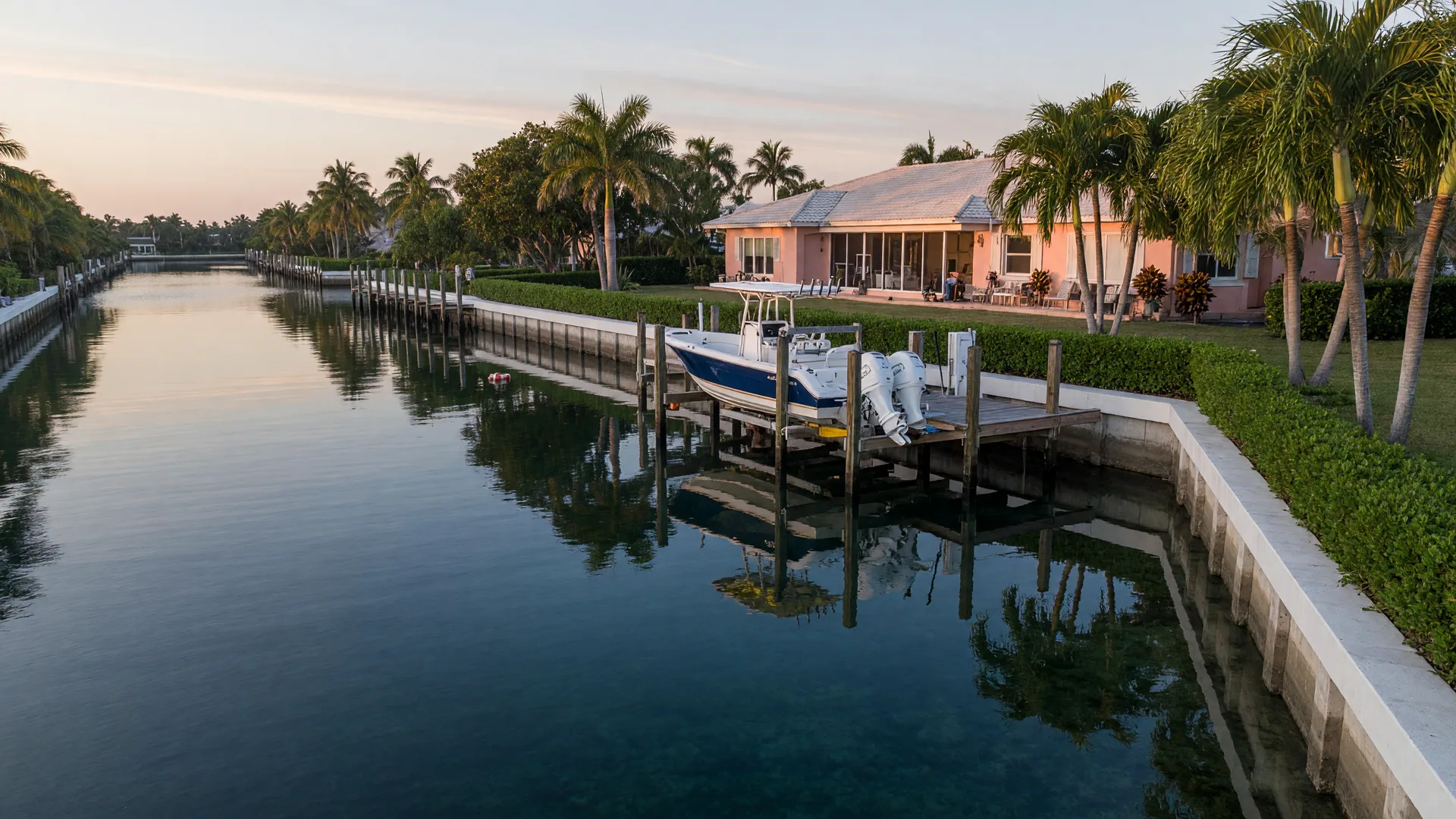
Water depth at mean low tide sets the size of boat a dock can handle. Here is how deeper water can widen your market when you sell, and why documented dredging acts like a lasting improvement.
Why water depth matters at your dock
The water depth at your dock, measured at mean low tide, sets the practical size of the boat your property can handle. At mean low tide the water is at its lowest average level, so it is the honest test of whether a boat clears the bottom.
A boat floats only where the water is deeper than its draft, and most owners want some clearance below the hull as well. Deeper water at your dock means a wider range of boats can tie up safely, from a small skiff to a larger center console.
How deeper water widens your buyer pool
When you sell, the boat a property can serve is one of the first things a waterfront buyer looks at. A deeper channel and slip can serve larger boats, and that broadens the pool of potential buyers: owners of bigger boats simply cannot consider a property where their boat will not clear the bottom at low tide.
In that way, usable water depth is part of what a buyer is purchasing. Two properties can look similar from the street and still be very different at the water.
A documented dredging project travels with the property
A dredging project behaves like an improvement that carries over at resale. The deeper water does not stay behind when you leave. The new owner steps into a dock, slip and canal that are already dredged, and records of the permitted work and the depths it restored can be passed along like any other documentation.
That is why it helps to keep your paperwork: the permit, the depth records and any survey from the dredging project. Together they document what the waterway can handle, which is useful information for an appraiser, a buyer and the buyer's lender.
The caveat: value depends on your local market
Here is the honest part. How much any of this adds to your selling price depends on the local market and on comparable sales. Deeper water can be a strong advantage, but a property's value is set by what similar waterfront properties in your area actually sell for.
If you are planning to sell, look at recently sold waterfront properties near you, and talk to a waterfront appraiser or a real estate professional who knows your market. They can tell you how depth, dock condition and permits are treated in your neighborhood.
The owner's math: draft vs. depth at mean low tide
Boat draft is the depth of water a boat needs to float, measured from the waterline to the lowest point of the hull. A boat with a 2-foot draft needs water deeper than 2 feet at mean low tide to avoid touching bottom, and most owners want extra clearance so wakes, tides and loaded weight do not leave the hull on the bottom.
Depth at mean low tide is the number to check, because that is the shallowest the water regularly gets. But that number is not permanent. Canals and slips collect sediment over time, so last year's depth is not today's depth. The only reliable way to know what a waterway holds right now is to measure it.
How Eastern Dredging can help
Eastern Dredging restores the depth your waterway is supposed to have. Every project is handled with proper permits, purpose-built equipment sized for residential docks and slips, and complete haul-away of the dredged material, and depth documentation becomes part of the record you can keep.
For a free estimate, call (561) 299-1323 or email slselleck@gmail.com. Tell us about your dock and slip and we will help you understand what your waterway needs.
This content was created with AI assistance and reviewed for fair housing compliance.
More from News & Updates